
The Science
Reversing Age-Related Immune Decline
The first clinical trials to demonstrate thymus regeneration and epigenetic age reversal in humans.
Explore the ResearchThe Thymus: Key to Immune Regeneration
The thymus gland produces T cells—your immune system's primary defense against infections and cancer. Starting around puberty, the thymus begins to shrink and is gradually replaced by fat tissue.
Research published in PNAS demonstrates that this thymic decline—not just mutation accumulation—is the primary driver of age-related cancer risk. T cell production declines with a half-life of approximately 16 years, leaving the immune system progressively unable to eliminate cancerous cells.
Our research demonstrates that this decline can be reversed through carefully designed intervention protocols, restoring immune function and reversing biological age as measured by epigenetic clocks.
Thymus and Reducing Cancer Risk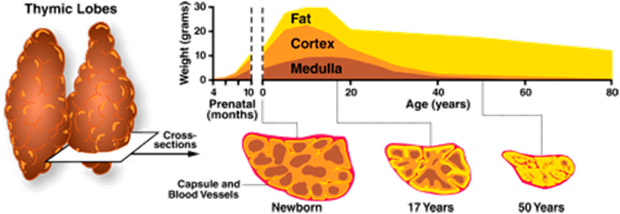
The thymus shrinks dramatically with age, replaced by fat tissue
The Problem
Thymic Involution Causes Immunosenescence
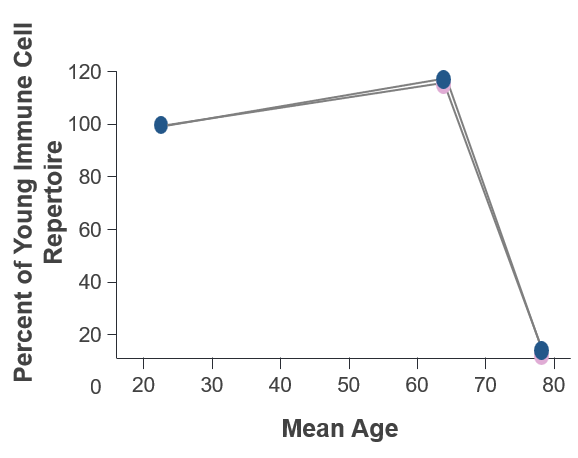
The thymus is the master regulator of your immune system. Starting around puberty, it begins to shrink and is gradually replaced by fat tissue. By age 65-75, this leads to a massive collapse in immune competence.
The naive T cell repertoire declines dramatically while memory cells accumulate, leaving the immune system unable to respond effectively to new threats.
Landmark Research
The TRIIM Trial
The first human clinical study to demonstrate successful thymus regeneration and reversal of epigenetic aging.
"This has huge implications not just for infectious disease but also for cancer and ageing in general."
— Dr. Sam Palmer, in Nature
Thymic Regeneration Confirmed
MRI evidence of improved thymic structure and function
Epigenetic Age Reversal
2.5 years average reversal across all established clocks
Favorable Safety Profile
Mild side effects were dose-dependent and reversible
Extended Research
The TRIIM-X Trial
Building on the original study with a larger cohort, broader demographics, and longer follow-up.
Age Reversal Validated
Epigenetic benefits mirrored those seen in the original TRIIM trial
Improved Physical Fitness
Significant gains in VO2max and functional capacity
Women Included
Extended study to include female participants
Join the Future of Immune Regeneration
Learn how you can participate in our programs or access personalized treatment protocols.